Home / The game name is not the complete rule set
Independent guide · 2026-10-30
The game name is not the complete rule set
 Partner offers · Country: United KingdomUpdated 24 November 2026


7Gear · Welcome bonus£3,000 welcome bonus on your deposit
Reviews (8,590)
5.0Rating


Two casino tables can carry the same familiar name while using different decks, dealer actions, payouts, wheel layouts, qualification rules or side bets. Those differences alter the cost and decisions available to the player.
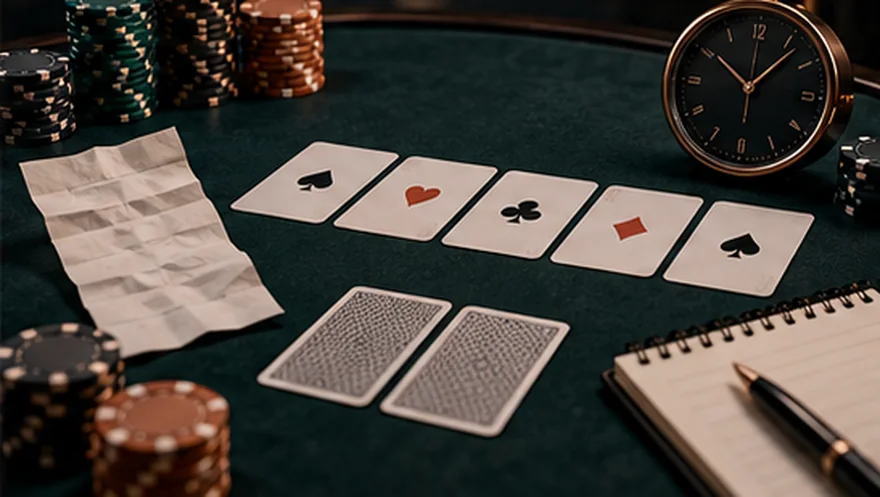
This guide therefore reviews the exact table rather than applying a generic strategy page to every variant. The worksheet records provider, table identifier, currency, observation time, rule version, paytable and displayed limits. It distinguishes house-banked casino poker from player-versus-player poker, where rake and tournament fees replace a casino paytable. It also separates the main game from side wagers, which can have their own probabilities and returns. No system is presented as a way to overcome the house edge, and no short session is used to prove a long-run rate. For live games, the video feed is supporting context while the wager confirmation, round identifier and account ledger form the dispute record. For digital tables, the published game information must still match what the interface offers. The practical result is a reproducible comparison: a reader can see which rule changed, calculate from the stated inputs and reject a table whose essential terms or limits are unavailable.
Name the exact product before doing any maths
Record the operator, provider, table title, game identifier, currency and observation time. A lobby label such as blackjack or poker is not specific enough for a rule comparison.
Identify whether the game is digital, live-dealer, peer-to-peer or house-banked. The party controlling the account can differ from the studio or software supplier shown on the table.
Open the in-game rule sheet and paytable rather than relying on a search snippet or another casino's page. Archive the source or note its version where the interface permits.
The live-product checklist on non-GamStop live casinos records table and studio layers separately. If the exact rule cannot be found, label the comparison incomplete.
Build a rule sheet from independent inputs
Create one row for every input that can change the result: decks, shuffle policy, dealer action, player options, payout, wheel type, commission, qualification and side-bet paytable.
Do not copy a single published house-edge figure without checking that its assumptions match the selected table. A calculated figure is only as reliable as the rule set entered.
Record displayed minimum and maximum wagers by bet type. A table maximum does not necessarily apply to every side wager or split hand.
Keep strategy, probability and commercial offer fields separate. A bonus condition can affect account treatment, but it does not change the mathematical rules of a roulette wheel or card draw.
Interpret house edge without outcome promises
A house edge is a long-run expectation under stated rules and decisions, not the amount that a particular session must lose. Short results can vary widely in either direction.
When comparing published values, confirm whether they assume an optimal decision pattern and whether side bets are excluded. Label calculations and sources rather than presenting false precision.
Return-to-player language may describe a theoretical rate over many resolved wagers. It does not create a schedule on which losses are repaid or guarantee that an individual reaches that rate.
No staking progression changes the underlying probability of an independent wager. Increasing after a loss can raise exposure rapidly while table limits or budget end the sequence before the hoped-for recovery.
Read blackjack beyond the word blackjack
Count decks and record whether the dealer hits or stands on soft totals. Note doubling options, split restrictions, resplitting, surrender, insurance and the natural-blackjack payout.
Check whether split aces receive one card, whether a natural after splitting is treated differently and whether the dealer checks for blackjack before player decisions. Each rule belongs in its own field.
A strategy chart built for another deck and rule combination may recommend different actions. Use only a chart whose stated assumptions match the table, and treat it as decision guidance rather than a guarantee.
Side wagers such as pairs or combinations require separate paytables. Their prominent placement does not make their cost equivalent to the main hand.
Record roulette wheel and bet treatment
Identify the wheel layout and the number of zero pockets instead of relying on colour or table name. Record any rule affecting even-money bets when zero occurs exactly as published.
Check straight, split, street, corner, line, dozen, column and outside payouts against the in-game table. Special racetrack or neighbour interfaces are bet-entry tools, not different evidence of the underlying wheel.
For live roulette, preserve round identifier, accepted wager and result record when a dispute arises. A delayed video frame alone cannot establish that the recorded outcome was altered.
Do not present pattern tracking, hot numbers or wheel histories as predictive proof. Past independent results do not repair an unfavourable payout structure.
Separate baccarat and casino-poker variants
For baccarat, record banker commission or alternative payout rules, tie payouts and side-bet tables. Similar table names can produce different costs when banker wins are treated differently.
For casino poker, identify the player's required decisions, dealer qualification, ante and raise relationship, and paytable for winning hands. The dealer represents the house rather than another poker player.
Peer poker belongs in the online poker cost guide, where cash rake, caps and tournament fees are the relevant charges. Do not use a house-game paytable to describe a player-funded prize pool.
Record progressive or jackpot contributions separately where shown. An advertised top prize does not establish the probability, funding rule or current amount.
Treat every side bet as another game
Copy the side-bet name, stake range, qualifying outcomes and complete paytable. Do not infer missing payouts from a similarly named wager at another table.
Calculate side-bet exposure separately from the base game. Repeated small additions can materially change the total amount risked per round and the session budget.
If a promotion requires a qualifying game, confirm whether side wagers contribute or are excluded. Bonus eligibility and mathematical value are different questions.
Hide or disable optional bets when the interface permits and they do not belong in the plan. A visually animated side panel is not evidence that the wager improves the main game's return.
Preserve a table dispute that another person can follow
Record casino account, table identifier, provider, round or hand reference, accepted stake, rule version, result, ledger movement and time. Keep original exports or screenshots unchanged.
Write the claimed discrepancy in one sentence and identify the expected result under the captured rule. Avoid combining a payment complaint, stream problem and game-rule question without separating their timelines.
Submit through the verified operator route, because the presenter or lobby chat is not an account-dispute channel. Ask for the underlying game record where a video or interface did not update clearly.
Redact personal and payment information not needed to locate the round. The evidence should reproduce the question without exposing credentials.
Apply a stop rule before the first round
Set a cash loss, time limit and maximum stake before opening the table. Include side bets and repeated small wagers in the same session total.
Choose a table whose minimum leaves room for the planned number of decisions without forcing larger exposure. If the available minimum exceeds the budget, do not adapt the budget to the game.
Use account, bank or device controls to slow access. Anyone who has self-excluded should preserve that protection and use the ad-free responsible gambling guide.
End the session when rules become unclear, a round is unresolved, the connection obscures decisions or losses trigger stake increases. More play cannot turn missing evidence into a valid rule set.
| Game | Inputs to record | Do not carry over |
|---|---|---|
| Blackjack | Decks, dealer action, options and natural payout | Strategy from another rule set |
| Roulette | Wheel, zero treatment and paytable | Patterns from prior spins |
| Baccarat | Commission, tie and side-bet payouts | Rules from a similar table name |
| Casino poker | Qualification, decision tree and paytable | Peer-poker rake assumptions |
| Side bets | Stake range, outcomes and full paytable | Base-game return |
| Live table | Round ID, accepted bet and ledger | Video delay as proof of outcome |
Questions & answers
Why do blackjack rules matter?
Decks, dealer action, splitting, doubling, surrender and payouts can change both decisions and long-run cost.
Use the rule sheet for the exact table.
Does house edge predict my session result?
No. It is a long-run expectation under stated assumptions, not a timetable for an individual's wins or losses.
Short outcomes can vary substantially.
Is casino poker the same as online peer poker?
No. Casino poker uses house rules and a paytable, while peer poker uses rake or tournament fees.
Compare them through different records.
Can a side bet use the main game's return figure?
No. A side wager has its own outcomes and paytable.
Record its stake and cost separately from the base game.
What evidence is needed for a disputed round?
Keep the table, provider, round identifier, accepted stake, applicable rule, result and ledger movement.
Use a dated chronology and redact unrelated personal data.
Do betting systems overcome the table edge?
Changing stake size does not change the probability or payout rule of an independent wager.
Progressions can increase exposure quickly and meet budget or table limits.